
This website may earn commissions from certain purchases via the Amazon Associates program at no cost to you.
The most comfortable drills for sore hands, weak grip, and painful joints in 2025
It’s so frustrating when squeezing a drill trigger causes your fingers to stiffen and ache for hours afterward. However, if you switch to a drill that weighs under 3 pounds and has a long trigger you can pull with three fingers, you’ll finish your furniture assembly or shelf installation without the flare-up that used to keep you from working the next day.
Most people with arthritis buy drills based on brand recognition or power ratings, which explains why so many end up with heavy contractor-grade tools that hurt to hold. If I were to estimate how many drill purchases lead to joint pain and abandoned projects, I’d say at least half, and that assumes people actually try the drill for more than five minutes before their hands start complaining.
The real issue is that standard drills are designed for speed and strength, not for protecting your wrists and fingers. Have you ever noticed how most drills feel nose-heavy when you hold them in one position for more than a few seconds?
The weight distribution forces you to grip harder just to keep the tool steady, which loads your small joints with unnecessary strain. That’s why people with arthritis often dread simple tasks like hanging curtain rods or assembling a bookshelf, even when they know exactly how to do the job.
Even a basic repair that should take ten minutes can leave you with sore hands for two days if the tool fights your body the whole time.
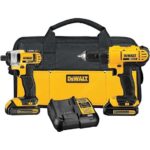
You actually want to ignore the “most powerful for the price” recommendations and instead hunt for the lightest drill that still handles your typical jobs. This usually means choosing a 12V compact drill for household tasks or a well-balanced 18V model if you occasionally work with thick lumber or concrete. If you find yourself tackling tougher projects, consider investing in heavyduty cordless drills for concrete, as they provide the necessary power for drilling into hard surfaces. Furthermore, these tools often come with features that enhance precision and reduce user fatigue, making them ideal for larger jobs. It’s important to assess your specific needs and choose a model that complements your work style.
The savings in joint stress will let you keep doing projects years longer than if you push through with a heavy tool.
And it can be more difficult for you if you also have shoulder or elbow problems, because overhead work with a heavy drill loads those joints too. But choosing a drill under 3 pounds bare and using two hands whenever possible will protect your entire arm, not just your fingers.
Here are 18 drills that prioritize your comfort and joint health over raw power.
What makes a drill arthritis-friendly
Weight matters more than almost anything else. A drill that weighs 2.5 pounds bare puts far less strain on your wrist and shoulder than a 5-pound model, especially during overhead work or extended sessions.
Balance is the second key. A drill that tips forward or backward forces you to grip harder to control it, which quickly fatigues sore fingers.
Look for compact designs where the battery and motor are close together.
The handle should have a contoured, rubberized grip that fits your hand without forcing your fingers to stretch. Soft materials help you hold on with less pressure.
Trigger design is often overlooked. A long trigger that accepts two or three fingers spreads the load and reduces the risk of trigger finger tendonitis. Variable speed control that responds smoothly means you spend less time feathering the trigger.
Safety features like autostop or kickback control can save your wrist from sudden twisting when the bit binds, which is especially important if your joints are already vulnerable.
Good LED lighting helps you see without twisting your neck or wrist into awkward positions, and a smooth keyless chuck saves your fingers when you change bits.
18 ergonomic cordless drills that protect your joints
1. Bosch 18V Brushless Hammer Drill/Driver
This drill weighs only about 2.5 pounds bare and includes an auto shut-off feature that stops the motor if the drill begins to over-rotate, which directly protects your wrist from sudden torque. The short head and narrow profile make it easy to hold with smaller or weaker hands, and the rubberized grip is comfortable even during longer sessions.
2. Skil PWRCore 20 Compact Drill Driver
At about 2.23 pounds without the battery and a short 6.1-inch head, this is one of the lightest 20V drills available. Testers consistently praise how it “feels in the hand,” with a shape that balances well and doesn’t require a strong grip to control.
3. Metabo HPT Compact Drill with Hammer Function
Testing shows this compact model combines very low weight with higher performance than many other compact drills. It features excellent balance, ergonomic grip design, and kickback control to protect your wrists from sudden torque spikes when the bit binds.
4. Skil PWRCore 20 Brushless Compact Drill (2nd Gen)
The second-generation model shrank in size and dropped weight compared to earlier versions while increasing performance. This means you get more work done with less strain, which is exactly what matters for arthritis.
5. DeWalt 12V Xtreme Drill/Driver
This 12V drill weighs around 3 pounds with the battery and features a secure, rubberized handle with a responsive trigger. Users highlight how the trigger control let’s you work precisely without squeezing hard, which protects your finger joints during repetitive tasks.
6. Bosch 12V FlexiClick Drill/Driver
Designed as a very compact, ergonomic system that accepts many heads for tight spaces, this drill becomes one of the smallest available when used with the standard bit holder. The light weight and small size are ideal for limited grip strength and painful joints.
7. Milwaukee 2904-20 M18 Fuel Hammer Drill
This drill has the best power-to-weight ratio among several popular models and a compact 7-inch length. At about 3.3 pounds bare, it’s relatively light for its performance and includes an autostop feature that prevents over-rotation and potential wrist injury.
8. Ridgid 18V Brushless Drill/Driver
Available in a combo kit, this drill weighs about 2.5 pounds bare and delivers strong performance with kickback control to protect your wrist. Testers found it comparable to top-tier brands, so you can work more efficiently and reduce the time your joints are under load.
9. Ingersoll Rand D3141 IQV20 Compact Drill Driver
This compact drill weighs about 2.3 pounds with 450 in-lb of torque. The size and speed are tuned for control and accuracy, which let’s you use moderate grip force and avoid sudden jumps in torque that can strain your fingers.
10. Ingersoll Rand D5241 IQV20 Hammer Drill
This hammer drill provides 1,100 in-lb of torque while keeping weight to around 3.5 pounds, which undercuts many comparable hammer drills. For occasional concrete or masonry jobs, this let’s you work with less mass in your hands.
11. Ryobi 18V One+ Compact Hammer Drill
Weighing only about 3.1 pounds bare, this drill delivers strong performance at a price that works for everyday users. If you already use Ryobi batteries, this can be a solid upgrade from older, heavier models in the same system.
12. FLEX 24V Brushless Cordless Hammer Drill
This drill includes rotation protection that stops the drill if it over-rotates, which is critical when your wrists are sensitive to sudden twisting or jolts. At about 3.9 pounds bare, it’s heavier, so reserve it for short tasks or when you can brace your arms.
13. Makita 18V LXT Hammer Drill (XPH14)
This drill has strong performance and many settings but weighs about 5.5 pounds bare, making it suitable only if your hand and shoulder strength are still fairly good and you reserve it for occasional heavy tasks requiring more power.
14. DeWalt 20V MAX XR Hammer Drill
The 20V MAX XR includes an anti-rotation feature that shuts off the motor if it senses too much rotational motion, which helps protect your wrists when the drill encounters knots or binds. The weight is about 4.1 pounds bare, so use it sparingly with two-hand support.
15. Bosch 12V Drill/Driver (PS31)
Bosch’s 12V drills are widely appreciated for low weight and compact size, though one user noted difficulty pressing the battery release tabs with arthritic thumbs. Check the battery mechanism before buying to confirm you can operate it comfortably.
16. DeWalt 20V Compact Homeowner Drill (Non-XR)
This more basic 20V compact drill typically weighs around 3 pounds with battery and has a secure, ergonomic grip with a responsive trigger. For lighter duty tasks, it’s easier to manage than the XR hammer drill.
17. Metabo HPT 18V Hammer Drill
Described as well balanced and comfortable for extended use, this drill weighs around 5 pounds with battery. The compact design and balance make it easier to handle for longer jobs without straining your wrists.
18. Budget Lightweight Household Drills (Various Brands)
Several budget-friendly compact drills in the 12V to 18V range now advertise weights under 3 pounds with the battery and focus on grip comfort and low vibration. These may not carry famous brand names, but can still be quite arthritis-friendly if the grip feels good, the balance is neutral, and the trigger is long enough for two fingers.
My top pick for arthritis-friendly drilling
The Bosch 18V Brushless Hammer Drill/Driver stands out as the best starting point if you want a drill that truly protects your joints. It combines very low bare weight at about 2.5 pounds, a compact body, excellent ergonomics, and an auto shut-off feature to prevent over-rotation.
This safety feature directly protects your wrists from sudden torque when the bit binds in wood or hits a knot.
The drill still has enough torque for typical home tasks and can handle some concrete drilling, so you’re not locked out of heavier work when you need it.
If budget is your main concern, the Skil PWRCore 20 compact drill is an excellent choice. It’s even lighter at about 2.23 pounds bare, testers describe it as feeling excellent in the hand, and it costs significantly less than the Bosch. If budget is your main concern, the Skil PWRCore 20 compact drill is an excellent choice. It’s even lighter at about 2.23 pounds bare, testers describe it as feeling excellent in the hand, and it costs significantly less than the Bosch.
For light to medium projects like furniture assembly, hanging shelves, and basic repairs, it provides everything you need without the price premium.
Whichever drill you choose, add a few habits that multiply the benefit. Use two hands whenever possible, with one on the main grip and one supporting the battery or an auxiliary handle.
Pre-drill pilot holes to reduce the force required. Take short breaks before your joints start hurting, not after they’re already sore.
Use sharp, good-quality drill bits and drivers so the drill doesn’t fight the material. For overhead or prolonged work, support your forearms on a ladder, wall, or brace to reduce wrist load.
If you’re ready to make your next project easier on your hands, start with one of the compact, lightweight drills listed here. Your joints will thank you, and you’ll be able to keep doing the work you enjoy for years longer than if you kept pushing through with a heavy tool that fights you every step. When selecting the best cordless drills for winter use, consider battery life and performance in low temperatures to ensure optimal functionality. Additionally, look for models with ergonomic designs that provide a comfortable grip in colder conditions. With these tools in hand, you’ll breeze through your winter projects while maintaining efficiency and precision.
Frequently asked questions
What drill weight is reasonable if I have arthritis?
For most people with arthritis in the hands or wrists, a bare tool weight under about 3 pounds is a good target for routine use. Ergonomics research and tool reviews consistently show that light weight and balanced design reduce fatigue and strain over time.
You can go heavier for short tasks if the drill has kickback control or autostop features, but for general use, lighter is noticeably kinder to your joints.
Is 12V enough power, or do I need 18V or 20V?
For common home tasks like assembling furniture, drilling pilot holes in wood, hanging shelves, and light metal work, 12V drills are usually plenty and are easier on your hands because they’re smaller and lighter. If you regularly drill into thick lumber, masonry, or large lag screws, a compact 18V model like the Skil PWRCore 20 or Bosch 18V can be a good compromise between power and comfort.
Start with the lightest tool that realistically covers your usual projects, not rare worst-case scenarios.
What handle shape works best for arthritic hands?
Ergonomic guides for power tools recommend a pistol-grip design with a contoured, rubberized handle that matches the natural curve of the hand and avoids pinch points. The grip should allow you to wrap your whole hand around it without stretching your fingers, and it should not feel too thick or too thin. Whenever possible, hold the drill in person before buying to see whether you can maintain a relaxed grip and still control the tool comfortably.
How important is trigger design for arthritis?
Trigger design matters more than most people realize. Repeated index finger motion on short triggers can increase the risk of trigger finger tendonitis.
An ergonomic drill ideally has a longer trigger that you can pull with two or three fingers, which spreads the load and reduces strain on any one joint.
Smooth variable speed control also helps, since you don’t need to keep making tiny adjustments while you work.
Are hammer drills a bad idea if I have arthritis?
Hammer drills vibrate more and send more impact to your hands, so they can aggravate symptoms if used for long periods or with poor technique. However, sometimes they’re necessary, such as for drilling into concrete.
In those cases, choose a lighter hammer drill with kickback control or rotation protection and use it in short bursts. Additionally, regular cordless drill maintenance tips can help extend the life of your tool and ensure it functions at peak performance. Remember to clean the chuck and check the battery contacts for debris, as these simple steps can prevent power issues. Finally, store your drill in a dry place to avoid moisture damage that could lead to rust and corrosion.
Support your arms on a stable surface, let the drill do the work, and stop at the first sign of joint pain instead of pushing through.
What about changing batteries with limited hand strength?
Battery design differs significantly between brands. Some 12V models have small release tabs that can be hard to press with arthritic thumbs.
Check how the battery loads and releases before you buy if possible.
Look for slide-on packs with large, soft tabs as opposed to compact packs with small latches. If you already own a drill that’s hard to change, you can use small clamps or tools to press the tabs, though the safer long-term solution is usually a more ergonomic battery system.
Are there any other features that really help arthritis sufferers?
A few details matter more than you might think. Vibration reduction through handles with cushioning and dampening mechanisms reduces nerve and muscle fatigue in the hands.
Built-in LED work lights keep your wrist and neck in comfortable positions because you can see the work without twisting.
A smooth, single-sleeve keyless chuck that turns easily saves your fingers when changing bits. Good balance means the drill doesn’t tip forward or back when you relax your grip, which allows you to hold it more lightly and is crucial when joints are sore.