This website may earn commissions from certain purchases via the Amazon Associates program at no cost to you.
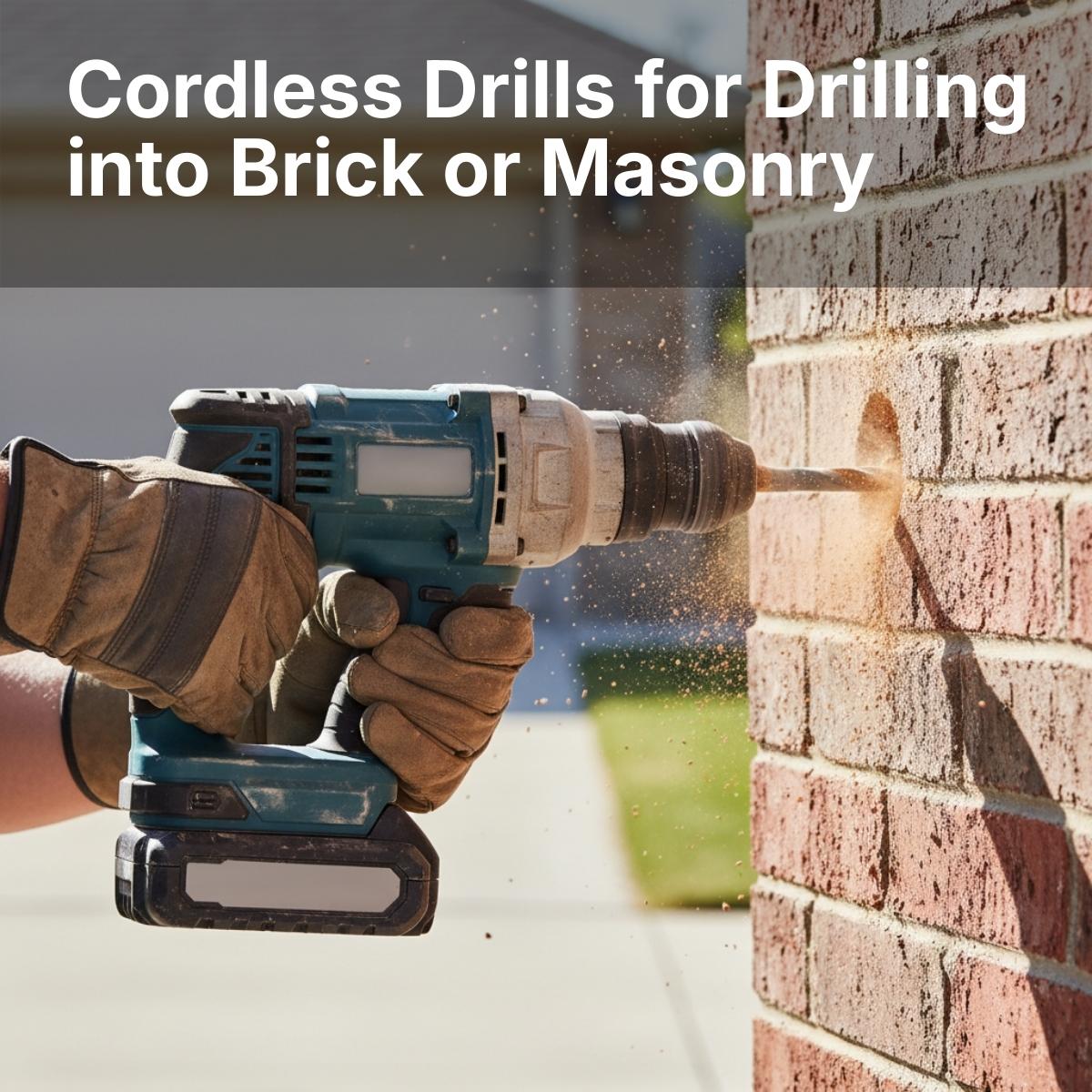
Drilling through brick or concrete with a standard cordless drill gets you nowhere fast. The bit binds, the motor strains, and you burn through batteries trying to punch a single hole.
What you need is a hammer drill that combines rotation with thousands of percussive strikes per minute, fracturing dense masonry ahead of the bit so it can clear debris and advance steadily.
These tools range from compact 12-volt models for occasional anchor holes to full-size rotary hammers built for daily construction work. The difference comes down to impacts per minute, motor torque, and whether the tool uses a standard chuck or SDS quick-change system.
Higher BPM ratings, 30,000 and above, mean faster drilling with less effort on your part, while brushless motors deliver more runtime per charge and longer tool life.
When you match the right drill to your workload, brick and block become manageable instead of exhausting.
List of 20 Cordless Drills for Brick and Masonry
1. DeWalt 20V MAX XR Brushless 1-Inch Rotary Hammer
This rotary hammer delivers three operating modes: drill-only, hammer-drill, and chipping. The 4,600 BPM and 1,100 RPM combination handles everything from brick veneer to poured concrete, and testers reported clean holes through cinder block and tile without the bit wandering or stalling.
The adjustable depth rod locks your hole depth precisely, which matters when you need consistent anchor placement across multiple fasteners.
Available at DeWalt and major tool retailers.
2. Craftsman V20 Cordless ½-Inch Hammer Drill Kit
You get 38,250 BPM and 2,250 RPM in a package that costs considerably less than premium models. The two-speed transmission and onboard LED work well for garage projects and basement renovations, though the tool slows noticeably in dense concrete when you apply heavy pressure.
Running a higher-capacity V20 battery extends your drilling time enough to finish most residential anchor installations on a single charge.
Available at Craftsman and major tool retailers.
3. DeWalt 20V MAX XR ½-Inch Hammer Drill/Driver Kit
The brushless motor and three-mode selector give you flexibility to switch between driving screws and drilling masonry without swapping tools. Testers praised the variable-speed trigger for controlled starts on tile and glazed brick, where sudden impacts can cause surface chips.
The rubberized grip reduces hand fatigue during extended sessions, and the tool maintained consistent power through dozens of holes in concrete block.
Available at DeWalt and major tool retailers.
4. Makita 40V MAX XGT ½-Inch Hammer Driver-Drill Kit
The 40-volt XGT platform pushes 2,600 RPM most speed with enough torque for concrete anchors in commercial-grade block. Vibration stays low compared to 18-volt competitors, which you notice after drilling twenty or thirty holes overhead.
The removable side handle adds control when you lean into tough spots, though the electronic clutch needs an extra button press to disengage, which some find annoying in rapid-fire work.
Available at Makita and major tool retailers.
5. Skil PWRCORE 20V ½-Inch Hammer Drill Kit
This compact model hits 1,450 RPM and 21,750 BPM, suitable for occasional work like mounting shelves on foundation walls or drilling drainage holes in retaining block. It produced clean tile holes in testing without chipping edges, and handled standard cinder brick adequately.
Vibration increases under sustained pressure, but the belt clip and light weight make it easy to carry around job sites or store in tight toolboxes.
Available at Skil and major tool retailers.
6. Milwaukee M12 Fuel ⅝-Inch SDS Plus Rotary Hammer Kit
The 12-volt battery keeps this rotary hammer small enough for overhead work in crawl spaces and mechanical rooms where full-size tools become unwieldy. Despite the compact format, it delivers 900 RPM and 6,200 BPM with impressively low vibration.
The SDS chuck accepts quick-change bits that lock with a simple push, making bit swaps faster when you run multiple anchor sizes.
Electricians and HVAC techs appreciate the reduced bulk without sacrificing masonry capability.
Available at Milwaukee and major tool retailers.
7. Flex 24V Brushless Hammer Drill FX1271T
This model topped head-to-head testing with 2,000 RPM in standard mode and 2,250 RPM when you activate hammer mode, plus 38,250 BPM for aggressive material removal. Concrete drilling averaged 6.84 seconds per hole in timed tests, and the Turbo mode delivers most output when you hit rebar or especially dense aggregate.
The 7.5-inch head length fits between studs and joists where longer drills need awkward angles.
Available at Flex and major tool retailers.
8. DeWalt 20V Max XR Hammer Drill DCD1007
The three-speed transmission and 2,100 RPM top speed put this drill near the front of performance tests, with 1,400 inch-pounds of torque for self-feed bits and large hole saws. It tied for fastest spade-bit times and excelled at pilot holes in brick, where smooth starts prevent surface damage.
The LED control panel let’s you adjust light duration from five seconds to twenty minutes, useful in dusty environments where you need constant illumination without holding the trigger.
Available at DeWalt and major tool retailers.
9. Makita 40V max XGT Brushless Hammer Drill GPH01
Scoring 87 points in comparative testing, this drill combines 2,600 RPM and 39,000 BPM with 1,250 inch-pounds of torque. The XGT battery platform provides extended runtime on heavy loads like dense masonry block, and the electronic clutch cuts power before you overtorque fasteners in brick or strip threads in anchors.
Vibration damping keeps your hands comfortable through full shifts on commercial job sites.
Available at Makita and major tool retailers.
10. Ryobi 18V One+ HP Brushless PBLHM102
The best value proposition in testing at 65 points, this drill delivers 2,150 RPM, 34,400 BPM, and 850 inch-pounds for under $200 in kit form. It handles typical DIY masonry work, mounting TV brackets on brick, installing ledger boards on block foundations, hanging ceiling fixtures in concrete, without the premium price. The best value proposition in testing at 65 points, this drill delivers 2,150 RPM, 34,400 BPM, and 850 inch-pounds for under $200 in kit form. It handles typical DIY masonry work, mounting TV brackets on brick, installing ledger boards on block foundations, hanging ceiling fixtures in concrete, without the premium price. When considering the best cordless drills under $200 for various tasks, it’s essential to find models that offer durability and reliability. Not only do these drills provide the power necessary for heavy-duty projects, but they also often come with useful features like adjustable speed settings and ergonomic designs. Selecting the right one can make all the difference in achieving professional results at home.
Performance stays steady through moderate workloads, making it ideal when you need hammer-drill capability but use it only a few times per year.
Available at Ryobi and major tool retailers.
11. Milwaukee 2904 24V Hammer Drill
With 2,100 RPM, 33,000 BPM, and 1,400 inch-pounds, this model scored 85 points on fast fastening speeds, including 2.49 seconds for RSS screws. The Forge battery technology extends runtime noticeably when you drill multiple walls of brick veneer or frame into concrete block.
The tool balances drilling and driving modes well enough to serve as your primary drill on mixed-material jobs.
Available at Milwaukee and major tool retailers.
12. Metabo HPT 36V Hammer Drill DV36DC
This drill earned 78 points with 2,200 RPM, 33,000 BPM, and 1,400 inch-pounds of torque. The 36-volt platform provides plenty of reserve power for professional brick and block work, while the 3.9-pound bare-tool weight keeps it manageable during overhead installations.
Testing showed consistent performance drilling concrete without battery fade, and the tool recovered quickly between holes without excessive heat buildup.
Available at Metabo HPT and major tool retailers.
13. Ridgid 18V Brushless High-Torque Hammer Drill R861152
Scoring 76 points, this drill reaches 2,000 RPM and 32,000 BPM with 1,250 inch-pounds for masonry anchor work at contractor-friendly pricing. The standout feature is Ridgid’s Lifetime Service Agreement, which covers the tool, batteries, and charger when you register within 90 days of purchase.
That warranty makes the drill attractive when you need reliable masonry capability without worrying about repair costs down the road.
Available at Ridgid and major tool retailers.
14. Bosch 18V Profactor Brushless Hammer Drill GSB18V-1330CN
With 2,200 RPM, 30,000 BPM, and 1,330 inch-pounds, this 75-point drill includes a built-in leveling indicator that helps you start holes perpendicular to brick surfaces. The connected technology tracks usage patterns and maintenance intervals through a smartphone app, which appeals to tool managers on commercial crews.
Performance in concrete matched other premium 18-volt models without significant differences in drilling speed.
Available at Bosch and major tool retailers.
15. Hercules 24V Brushless Hammer Drill HCB92B
This budget-oriented drill scored 53 points but delivers 2,000 RPM, 32,000 BPM, and 1,200 inch-pounds for considerably less money than name-brand choices. It handles occasional masonry work, mounting outdoor fixtures on brick, drilling weep holes in retaining walls, installing foundation vents, without breaking your tool budget. When embarking on various projects, knowing the best drills for woodworking projects can significantly enhance the quality of your work. A reliable drill will not only improve efficiency but also ensure precision in cutting and assembly. Whether you’re a beginner or a seasoned artisan, investing in the right tools can make all the difference in your craftsmanship.
Expect adequate performance as opposed to top-tier speed or refinement.
Available at Hercules and major tool retailers.
16. Kobalt XTR Hammer Drill
The all-around performer includes electronic kickback control that stops rotation instantly if the bit binds in brick or catches rebar, protecting your wrists from sudden twisting forces. Overall capability matches more expensive models in drilling speed and hole quality, and the standard drill-driver version costs under $100 when you don’t need hammer mode for your current projects.
Available at Kobalt and major tool retailers.
17. Skil PWRCore 20 Brushless Compact Hammer Drill HD6294B-10
Weighing just two pounds bare, this drill reaches 1,800 RPM and 27,000 BPM for light masonry repairs around the house. The compact size fits easily in crowded toolboxes or storage bins, and the lower power output works well for small brick repairs, picture hangers in concrete block, or drilling starter holes for larger anchors.
You won’t tackle foundation work with it, but it handles intermittent residential needs adequately.
Available at Skil and major tool retailers.
18. Bosch 18V Hammer Drill/Driver (General Line)
This reliable model provides rotary hammering action through a standard ½-inch chuck with up to 1,330 inch-pounds of torque. The compact design suits renovation work where you drill through brick walls in tight spaces between existing framing and utilities.
Performance stays consistent across standard concrete block and clay brick, making it a dependable choice for general contractors who encounter mixed masonry materials.
Available at Bosch and major tool retailers.
19. Milwaukee M18 Fuel ½-Inch Hammer Drill
High power output paired with Redlithium batteries prevents the rapid battery drain common in older hammer drills, giving you enough capacity for sustained masonry sessions without mid-job charging breaks. The tool balances drilling and driving functions well enough to serve as your primary drill when you work on projects mixing wood framing with concrete anchors.
Available at Milwaukee and major tool retailers.
20. Flex 24V with Turbo (Additional Variant)
The Turbo mode boosts RPM when you encounter especially hard brick cores or aggregate-heavy concrete, maintaining progress when standard drills bog down. Testing showed consistent top speeds across different masonry types without the speed fluctuation common in lower-quality models.
The feature adds versatility when you can’t forecast material hardness before drilling.
Available at Flex and major tool retailers.
My Favorite: DeWalt 20V MAX XR Brushless 1-Inch Rotary Hammer
The DeWalt 20V MAX XR Brushless 1-Inch Rotary Hammer stands out because it includes chipping mode alongside drilling functions, letting you remove tile grout, chip damaged brick faces, or break up thin concrete without switching to a separate tool. That versatility matters when you work on renovation projects where old anchors need removal before you drill new holes.
Testing confirmed it handled every masonry type smoothly, from glazed tile to poured concrete, and the brushless motor runs cooler than older brushed designs while delivering more impacts per charge. The 4,600 BPM rating means faster holes with less effort on your part, and the pistol grip stays comfortable during overhead work or extended drilling sessions.
The adjustable depth rod locks positively at any setting, preventing the drift that cheaper models suffer when vibration loosens the adjustment collar.
You should grab this one if you drill masonry more than occasionally. The tool combines with DeWalt’s 20V Max battery system, so batteries swap across their full cordless lineup. When selecting the best cordless drills for DIY projects, it’s essential to consider factors like battery life, torque, and ergonomics. A reliable cordless drill can make all the difference in ensuring that your tasks are completed efficiently and effectively. Additionally, it’s worth exploring user reviews and comparisons to find the model that perfectly suits your needs.
Pick up a set of quality masonry bits, Bosch or DeWalt carbide-tipped bits hold up better than generic options, and you have a finish setup for any brick or concrete project.
Head to DeWalt’s site or your local tool retailer and check current bundle pricing. Kit deals often include two batteries and a charger for less than buying components separately, and the higher-capacity 5.0Ah or 6.0Ah batteries give you enough runtime to finish most residential projects on a single charge.
Once you run this rotary hammer through a few jobs, you’ll wonder how you managed with standard drills that bind and stall in masonry.
Frequently Asked Questions
What makes a hammer drill different from a regular drill for masonry work?
Regular drills only rotate the bit, which causes binding and excessive wear when drilling hard materials like brick or concrete. Hammer drills add a percussive hammering motion, measured in beats per minute or BPM, that delivers thousands of forward impacts while the bit rotates.
These rapid micro-impacts fracture the material ahead of the cutting edges, allowing the bit to advance steadily while clearing dust and debris.
You’ll find standard drills overheat and stall within seconds in dense concrete block, while hammer drills with 30,000+ BPM finish the same holes in under ten seconds without strain.
Do these drills need special SDS bits or can I use standard masonry bits?
Most drills on this list use standard ½-inch or ⅝-inch keyed or keyless chucks that accept regular hex-shank or round-shank masonry bits. You install carbide-tipped masonry bits the same way you would wood or metal bits.
SDS models like the Milwaukee M12 Fuel use a specialized quick-change system where bits lock into the chuck with a simple push and twist, making bit changes faster on jobs requiring multiple hole sizes.
SDS bits cannot fit standard chucks and vice versa, so check your drill’s chuck type before buying bits. Standard chuck drills give you more flexibility to use the same tool for wood, metal, and masonry with suitable bit changes.
How do I prevent the drill from overheating during extended brick drilling?
Pull the bit out of the hole every 10 to 15 seconds to clear accumulated dust and allow air circulation around the bit and chuck. Dust buildup insulates the bit and traps heat, accelerating wear on the carbide tip and putting extra load on the motor.
Use steady, moderate pressure as opposed to leaning heavily on the drill, the hammer mechanism does the work of breaking up material, so excessive force just generates friction and heat without speeding progress.
Higher-voltage platforms like 24V or 40V systems run cooler during sustained use because their larger motors don’t work as hard to maintain speed under load. Taking brief breaks between holes let’s the motor cool, and running high-capacity batteries (4.0Ah or larger) keeps voltage more stable throughout the discharge cycle.
What battery capacity do I need for drilling multiple holes in concrete or brick?
Start with 4.0Ah batteries as a least for consistent performance. Smaller 2.0Ah batteries drain quickly under the high current draw of hammer drilling, and voltage sags as they reduce, reducing drilling speed noticeably.
The 5.0Ah to 6.0Ah range handles most residential projects, installing a dozen anchor bolts, drilling cable pass-throughs, mounting ledger boards, on a single charge.
Professional-grade work benefits from 8.0Ah or larger batteries like the Flex Forge or Milwaukee High Output packs, which maintain voltage better under sustained loads and last through dozens of holes without requiring mid-job charging. Brushless motors extract more work per amp-hour than older brushed designs, so the same battery capacity goes further in newer tools.
Can these drills cut through rebar accidentally embedded in concrete block?
Premium rotary hammers like the DeWalt 20V Max XR or Flex Turbo models can sometimes graze small rebar or wire mesh with diamond-grit or carbide bits designed for reinforced concrete, but deliberately cutting rebar damages bits quickly and risks tool failure. Standard masonry bits will not cut steel, the bit dulls instantly and the drill stalls or kicks back.
Use a stud finder with metal-detection capability or a dedicated rebar locator to scan before drilling in poured concrete or structural block.
When you hit metal unexpectedly, pull out immediately and relocate your hole. Some building codes need rebar placement records for inspection, so check plans if available before drilling into structural concrete.
How often should I replace worn masonry bits?
Expect 20 to 50 holes from quality bits in hard brick depending on material density and drilling technique. The carbide tip gradually rounds off with use, requiring more pressure and time per hole until the bit stops cutting effectively and just polishes the hole bottom.
Premium bits from Bosch, DeWalt, or Hilti last longer than budget multi-packs because they use harder carbide grades and better brazing techniques.
You can extend bit life by clearing dust often and avoiding excessive pressure that overheats the tip. Some trade professionals sharpen dulled bits with diamond files, restoring the cutting edges for light-duty work, though resharpened bits never match factory geometry.
Replace bits when drilling time doubles compared to a fresh bit or when you notice burning odors from excessive friction.
Is a 12-volt drill adequate for brick work or do I need 20 volts or higher?
The 12-volt category works for light masonry tasks in confined spaces where full-size drills don’t fit comfortably. Models like the Milwaukee M12 Fuel handle tile, thin brick veneer, and occasional holes in standard concrete block adequately for electrical boxes, small anchors, or cable routing.
Plan on 20-volt or higher platforms for repeated drilling, deep holes, or dense concrete.
The larger motors maintain speed under load better and drill faster with less battery drain per hole, making them more practical for projects involving a dozen or more holes. If masonry drilling represents occasional work among mostly wood or metal projects, a quality 20-volt hammer drill gives you enough capability without investing in specialized rotary hammers.