This website may earn commissions from certain purchases via the Amazon Associates program at no cost to you.
If you are standing in your garage staring at a drill that won’t turn, or if you’re about to drop $300 on a new power tool combo kit, you want a straight answer: How long do cordless drill batteries actually last? understanding how to select the right drill can help you make an informed decision. Consider the various features available, such as battery life, torque settings, and ease of handling. Doing your research can save you time and money in the long run. When exploring the best cordless drill brands for 2023, it’s crucial to look for models that combine durability with high performance. Additionally, reviews from trusted sources can provide insights into customer satisfaction and long-term reliability. As you narrow down your options, keep in mind the brand’s reputation and warranty offerings to ensure a wise investment. Regular cordless drill maintenance techniques can extend the life of your tool and improve its performance. Simple checks like cleaning the battery contacts and ensuring the chuck is free from debris can make a big difference. Additionally, staying aware of how to properly store your drill between uses can further enhance battery longevity and efficiency.
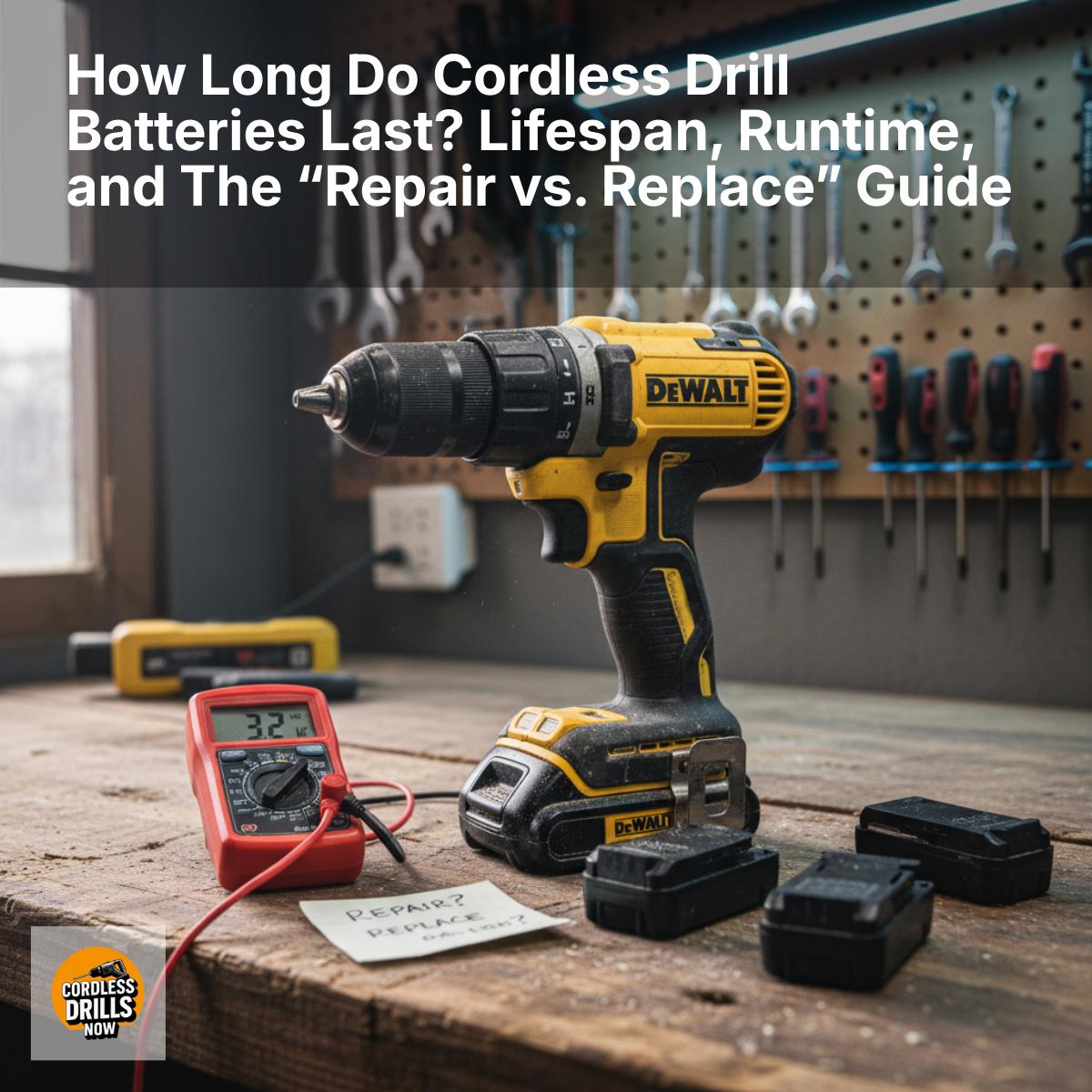
On average, a modern Lithium-Ion (Li-Ion) cordless drill battery lasts between 3 to 5 years or roughly 1,000 charge cycles. However, the “real” answer depends entirely on how you treat it, how often you use it, and the environment where you store it.
In this guide, we’ll break down the difference between “lifespan” and “runtime,” help you diagnose a dying battery, and solve the ultimate dilemma: Is it cheaper to buy a new battery or just replace the whole drill? one crucial aspect of drill maintenance techniques for longevity is ensuring that you regularly clean and lubricate the moving parts. additionally, storing your drill in a dry place and avoiding extreme temperatures can significantly extend its life. proper care not only enhances performance but also saves you money in the long run by reducing the need for replacements.
The Lifespan Benchmark: Years vs. Charge Cycles
When discussing battery life, it is important to distinguish between chronological age and cycle life.
Lithium-Ion (Li-Ion) vs. NiCd & NiMH
If your drill is more than 10 years old, it might use Nickel-Cadmium (NiCd) or Nickel-Metal Hydride (NiMH) batteries. These legacy technologies suffered from the “memory effect,” where they would “forget” their full capacity if not fully discharged. Proper drill battery maintenance best practices can extend the life of your tool significantly. Regularly checking for corrosion, ensuring clean contacts, and storing batteries at optimal temperatures are all crucial. Additionally, avoid letting the battery fully discharge frequently, as this can exacerbate the memory effect and reduce overall performance.
Today, almost every major brand—Milwaukee, DeWalt, Makita, and Ryobi—uses Lithium-Ion. Li-Ion batteries are superior because they hold a charge longer, weigh less, and don’t have a memory effect. However, they are sensitive to extreme temperatures and chemical aging.
The 1,000-Cycle Rule
A “cycle” is one full discharge and one full recharge.
- The Professional Tradesman: A contractor using a drill daily may hit 1,000 cycles in 2–3 years. To them, a battery is a high-wear consumable.
- The Weekend Warrior: A homeowner who uses their drill once a month for DIY projects might only put 20 cycles on a battery per year. In theory, that battery could last 10+ years chemically, but internal components usually degrade after year 5 or 6, leading to a loss of “punch.”
Runtime: How Long Does a Single Charge Last?
While lifespan is about years, runtime is about how much work you can get done on a Saturday morning before reaching for the charger.
Understanding Amp-Hours (Ah): The “Fuel Tank” Analogy
Think of Voltage (V) as the “horsepower” and Amp-hours (Ah) as the “fuel tank.” A 2.0Ah battery is a small tank; a 5.0Ah or 6.0Ah battery is a large tank.
Reality Check: Workload vs. Battery Drain
The harder the motor works, the faster the battery drains. If you are using a 2.0Ah “compact” battery, your runtime will vary wildly based on the task:
| Task | Estimated Runtime (2.0Ah Battery) |
|---|---|
| Light Drilling (Pre-drilling holes in pine) | 150+ holes |
| Driving Screws (2-inch wood screws) | 100+ screws |
| Heavy Boring (1/2″ bit through pressure-treated 4×4) | 20–30 holes |
| Hole Saw (2-inch hole in plywood) | 5–10 holes (Battery will likely overheat) |
Pro Tip: If you’re doing heavy-duty construction, skip the 2.0Ah batteries. They are designed for ergonomics, not endurance. Moving to a 5.0Ah battery won’t just give you more runtime; it often provides more “torque” because it can deliver more current to the motor.
5 Warning Signs Your Drill Battery is About to Fail
Before your battery becomes a paperweight, it will usually give you these “cries for help”:
- Rapid Power Drop-Off: The drill works at 100% for two minutes, then suddenly drops to 10% or stops entirely.
- Excessive Heat: The battery feels hot to the touch during light use or becomes scorching during a charge cycle.
- “Phantom” Discharging: You charge the battery to 100%, leave it on the shelf for three days, and find it at 20% when you go to use it.
- The Charger “Red Light”: Most modern chargers have a diagnostic light. If you get a “Failing/Bad” light, the internal resistance of the cells has likely reached a point of no return.
- Physical Swelling: If the plastic casing looks warped or the battery is difficult to slide into the tool, stop using it immediately. This is a fire hazard.
The “Repair vs. Replace” Dilemma: Is a New Battery Worth It?
This is where many DIYers feel the “Replacement Tax.” A single name-brand 5.0Ah battery can cost $120–$150, while a brand-new drill kit (including two batteries, a charger, and a bag) might be on sale for $199.
When to Buy a New Battery:
- You are heavily invested in a “platform” (e.g., you have 5 other Milwaukee M18 tools).
- Your drill motor is still in excellent condition (brushless motors last a long time).
When to Buy a Whole New Kit:
- Your current drill is a “brushed” model and is more than 5 years old.
- The cost of two replacement batteries exceeds the cost of a new “Combo Kit.” (Manufacturers often “subsidize” the cost of the drill to get you into their battery ecosystem).
The Truth About $30 Amazon “Knock-Off” Batteries
It is tempting to buy a generic battery for a fraction of the OEM (Original Equipment Manufacturer) price. While they often work, they lack the sophisticated Thermal Management Systems found in DeWalt or Milwaukee batteries. An OEM battery communicates with the tool to prevent overheating; a “knock-off” may not, which can lead to a melted tool or, in rare cases, a fire.
How to Double Your Battery’s Life: The Maintenance Checklist
You can’t stop chemical aging, but you can certainly slow it down.
1. The 20-80% Charging Rule
Lithium-Ion batteries hate being at 0% and they don’t love being at 100% for long periods.
- Don’t “Run it Dry”: As soon as you feel the drill losing power, swap the battery. Forcing those last few screws can drop the voltage so low that the charger won’t recognize it anymore.
- Avoid “Topping Off”: If you only used the drill for 5 minutes, you don’t need to put it back on the charger.
2. The Garage Trap: Optimal Storage
Temperature is the #1 killer of power tool batteries.
- Winter: Storing a battery in a freezing garage can cause the lithium to plate, permanently reducing capacity.
- Summer: Heat is even worse. Leaving a battery in a hot shed or the trunk of a car accelerates chemical breakdown.
- The Rule: If you wouldn’t sleep in the room, don’t keep your batteries there. Bring them into a climate-controlled mudroom or basement during extreme seasons.
3. Manage the Heat
Never charge a “hot” battery. If you just finished a heavy job and the battery is warm, let it sit for 30 minutes before sliding it onto the charger. Charging a hot battery is the fastest way to kill its long-term lifespan.
Frequently Asked Questions
Can I leave my drill battery on the charger overnight?
Most modern smart chargers (DeWalt, Milwaukee, etc.) shut off automatically once the battery is full. However, it is still best practice to remove them once charged to avoid “trickle” stress or potential fire risks from a faulty charger.
Do drill batteries expire if not used?
They don’t have an “expiration date” like milk, but they do have a shelf life. If a Li-Ion battery sits at 0% for a year, it will likely “self-discharge” past the point of recovery. If storing for a long time, leave it at about 50% charge.
How do I jumpstart a dead drill battery?
You may see YouTube videos about “jumpstarting” a battery using another battery and speaker wire. We strongly advise against this. It bypasses safety circuits and can cause the cells to vent or explode. If the charger says it’s dead, it’s time to recycle it.
Conclusion: Maximizing Your Tool Investment
Understanding how long cordless drill batteries last is about more than just a number of years—it’s about protecting your investment. By avoiding the “Garage Trap” of extreme temperatures and following the 20-80% charging rule, you can easily push a high-quality battery toward that 5-year mark.
If your battery has finally bit the dust, do the math: if the replacement costs more than half the price of a new brushless kit, it’s probably time to upgrade the whole tool.