Best Cordless Drills
Best Cordless Drills for 2026
Walk into any hardware store and the cordless drill aisle stretches endlessly. Every box promises the most power, the longest battery life, the best value.
The sheer number of options has become paralyzing.
The 2026 cordless drill market sits at a turning point where technology finally matches what professionals need, but that means you’re sorting through more choices than anyone reasonably should. The challenge has shifted from finding something that works to figuring out which option actually fits your specific needs.
Recent changes in drill technology matter more than incremental improvements usually do. Lithium-ion batteries now deliver power that matches corded models from just five years ago.
Brushless motors, which used to cost $400 or more in contractor-grade tools, now appear in budget models under $150.
Voltage platforms are fragmenting in ways that suggest the industry hasn’t settled on a standard, 18V dominated for years, but 24V and even 40V platforms are pushing into that territory.
The fascinating shift is that price no longer guarantees performance. Budget brands compete directly with premium manufacturers in specific metrics.
You can’t just grab the most expensive DeWalt or Milwaukee and assume you’re getting the best tool anymore.
You need to actually understand what you’re buying.
This creates both opportunity and confusion, which is exactly why breaking down the 2026 landscape matters if you’re trying to make a smart decision.
Understanding What Actually Matters in a Cordless Drill
Before looking at specific models, you need to separate genuinely important features from marketing hype. The specifications manufacturers plaster across packaging don’t always translate to real-world performance, and some impressive-sounding features are useless for most applications.
Battery Technology and What Voltage Really Means
Every modern cordless drill runs on lithium-ion batteries. This represents a basic shift from the nickel-cadmium technology that plagued older tools with memory effect problems.
The difference is transformative.
Li-ion batteries hold charges for months between uses, weigh significantly less than equivalent NiCd batteries, and charge faster. This change is why cordless tools became genuinely viable for professional work.
Voltage gets tricky though. A 20V drill isn’t necessarily more powerful than an 18V drill.
Many manufacturers engage in what you might politely call creative marketing around voltage ratings.
What actually decides power is watt-hours (Wh), which combines voltage with amp-hours (Ah) to give you true battery capacity.
A 4.0Ah battery can range anywhere from 72Wh to 144Wh depending on voltage configuration, yet most specifications conveniently omit this calculation. You’re left comparing numbers that don’t mean what you think they mean.
For most homeowners and DIY enthusiasts, an 18-20V platform hits the sweet spot between power and portability. These drills handle the vast majority of weekend projects without the weight penalty of higher voltage systems.
If you’re drilling into concrete regularly or working professionally, the emerging 24V and 40V platforms deliver noticeably more sustained power through demanding materials.
Brushless Motors and Why They Actually Matter
The shift from brushed to brushless motors represents the single most significant technical advancement in cordless drills over the past decade. Brushed motors use physical carbon brushes that contact the rotating armature, creating friction, heat, and eventual wear.
Brushless motors eliminate this contact entirely, using electronic controllers instead.
The practical benefits show up immediately. Brushless motors deliver longer runtime on the same battery, often 30-50% more than brushed equivalents.
They produce more power without increasing size or weight.
They’re significantly quieter during operation, which matters more than you’d expect when you’re working in residential areas or spending all day on a job site. Most importantly, they last considerably longer because there are no brushes to wear out.
What makes 2026 interesting is that brushless technology has finally penetrated budget models. You can now find brushless drills from brands like Ryobi, Ridgid, and even Black+Decker for under $150.
This was unthinkable just a few years ago.
The democratization means there’s really no compelling reason to buy a brushed motor drill anymore unless you’re literally getting it for free.
Chuck Size and What It Actually Limits
The chuck holds your drill bits, and chuck size decides the most bit shank diameter you can use. Most cordless drills come with either a 3/8-inch or 1/2-inch chuck, with some compact models using a fixed 1/4-inch hex socket instead.
In practice, a 3/8-inch chuck handles the vast majority of standard drill bits you’ll use for wood, drywall, and general construction. This covers probably 95% of homeowner applications.
A 1/2-inch chuck opens up compatibility with larger diameter bits, which matters primarily for professional applications like drilling large holes through structural lumber or working with specialized masonry bits.
The industry has basically standardized around this distinction. Light-duty drills use 1/4-inch hex sockets, general-use drills feature 3/8-inch chucks, and heavy-duty professional models come with 1/2-inch chucks.
This reflects the bit sizes these tools are actually powerful enough to drive effectively.
Torque Specifications and Real-World Power
Torque measurements in cordless drills have become problematic because manufacturers measure and report them inconsistently. You’ll see torque listed in inch-pounds (in-lbs), and higher numbers theoretically mean more twisting force.
But some manufacturers report most torque, others report sustained torque, and some use proprietary measurement units that don’t translate directly to standard specifications.
What matters more than the specific torque number is how the drill performs in real-world testing. Professional reviewers like Consumer Reports and Pro Tool Reviews have developed standardized protocols that measure drilling performance through various materials, runtime under load, and sustained power over extended use.
These practical tests reveal performance differences that specification sheets often obscure.
The other specification that matters tremendously is RPM (revolutions per minute) and BPM (blows per minute for hammer drills). Variable speed drills typically offer two speed ranges: a low-speed, high-torque setting (0-450 RPM) for driving screws and drilling tough materials, and a high-speed, lower-torque setting (up to 1,500-2,500 RPM) for drilling wood and softer materials.
Hammer drills add a hammering action measured in BPM, typically ranging from 27,000 to 40,000, which combines rotation with percussive force for drilling masonry and concrete.
The Battery Ecosystem Decision You Need to Make Early
When you buy a cordless drill, you’re not just buying a tool. You’re potentially committing to a battery ecosystem that will influence your tool purchases for the next decade.
Every major manufacturer has designed proprietary battery platforms that don’t work with competitors’ tools. DeWalt’s 20V Max batteries only work with DeWalt 20V tools.
Milwaukee’s M18 batteries only work with Milwaukee M18 tools.
Makita’s 18V LXT batteries only work with Makita 18V LXT tools. This is a deliberate strategy to create brand loyalty and lock customers into specific ecosystems.
The practical implication is significant. If you buy a DeWalt drill today and invest in extra batteries and a fast charger, you’re financially incentivized to buy DeWalt when you need a circular saw, an impact driver, or any other cordless tool in the future.
Switching brands means abandoning your battery investment and starting over.
This ecosystem lock-in actually makes sense once you understand it. Professional contractors often own six or more cordless tools from the same manufacturer, all sharing the same battery platform.
They can grab any battery from any tool and pop it into whatever they’re now using, which creates enormous flexibility on job sites.
But it also means your first cordless drill purchase carries more weight than you might realize.
Think carefully about your likely tool needs over the next few years. If you’re a homeowner who’ll probably only ever own one or two cordless tools, ecosystem compatibility matters less.
Just buy the best drill for your budget and don’t worry about platform considerations.
If you’re getting serious about DIY projects or working professionally, that first purchase should consider the broader ecosystem you’re entering.
Top Performers Across Different Categories
The Professional Standard: Flex 24V Brushless Hammer Drill
The Flex 24V FX1271T scored over 90 points in comprehensive professional testing, placing it at the absolute top of the 2026 rankings. What makes this drill genuinely exceptional is the combination of specifications that translate to real-world dominance: 2,500 RPM most speed, 40,000 BPM hammer rate, and 1,400 in-lbs of torque.
Specifications alone don’t tell the full story though. What separates the Flex in actual use is sustained performance under load.
Many drills deliver impressive power in short bursts but struggle to maintain that output during extended drilling sessions.
The Flex maintains consistent power through demanding applications like drilling many holes through concrete block or driving large lag bolts through structural lumber. The turbo mode activation kicks performance into a higher gear when you really need it, though it drains the battery noticeably faster.
The weight distribution on this drill is really well executed. At 3.7 pounds bare and 6.0 pounds with battery, it’s substantial but balanced. Professional contractors who’ve used it report less fatigue during overhead work compared to heavier competitors, which matters enormously when you’re installing ceiling fixtures all day.
The real question with the Flex is whether its $400-500 price point makes sense for your application. If you’re drilling into concrete regularly, working professionally, or tackling demanding renovation projects, the performance premium is genuinely worth it.
If you’re assembling furniture and hanging pictures, you’d be massively overpaying for capability you’ll never actually use.
The Three-Speed Advantage: DeWalt DCD1007
DeWalt’s premium offering introduces something most competitors don’t provide: a three-gear speed system instead of the standard two-speed configuration. This might sound like a minor difference, but it solves a specific problem that two-speed drills create.
Standard two-speed drills force you to choose between slow-speed power (optimal for steel and hard materials) and fast-speed drilling (optimal for wood and soft materials). This works fine for most applications, but it leaves an awkward gap for soft metals like aluminum, which need speeds between these two extremes.
Drill too slowly and you generate excessive heat that gums up the bit.
Drill too quickly and you lack the control and torque to cut cleanly.
The DCD1007’s three-gear system (450/1,300/2,000 RPM) provides that missing middle option. If you work with aluminum, copper, or soft metals regularly, this solves a genuine problem that prevents frustration and extends bit life.
For users who primarily drill wood and drive screws, the third gear doesn’t add much practical value, which is why this feature hasn’t become industry standard despite its legitimate benefits.
The Budget Contender: Kobalt KXDD 1424A-03
What’s really interesting about the 2026 market is how budget brands have closed the performance gap with premium manufacturers in specific metrics. The Kobalt KXDD 1424A-03 shows this trend dramatically.
It achieved top ratings for power, speed, and runtime in Consumer Reports testing despite selling for significantly less than comparable DeWalt, Milwaukee, or Makita models.
The 24V platform gives this drill legitimate heavy-duty capability that competes directly with professional-grade tools. The brushless motor delivers efficiency that matches or exceeds many premium competitors.
The actual drilling performance through various materials proves this isn’t just impressive on paper, it’s genuinely capable in real-world applications.
The compromise comes in charging time, which runs about 85 minutes for a depleted battery compared to 40-60 minutes for premium competitors with fast chargers. This matters enormously for professionals who need quick battery rotation on active job sites but matters less for homeowners who charge overnight between weekend projects.
The other consideration is ecosystem size. Kobalt is a Lowe’s house brand with a growing but still limited cordless tool lineup compared to DeWalt’s dozens of compatible tools.
If you’re planning to build a comprehensive cordless tool collection, the smaller ecosystem could become limiting.
If you’re buying a drill and maybe one or two other cordless tools, the performance-per-dollar value is genuinely compelling.
The Lightweight Champion: Skil PWRCore 20
At just 2.0 pounds bare weight, the Skil PWRCore 20 HD6294B-10 represents a fundamentally different approach to cordless drill design. Where most manufacturers chase most power and add weight accordingly, Skil prioritized portability and maneuverability above all else.
The practical impact of this weight difference is more significant than you’d expect. Overhead drilling with a 6-pound drill creates noticeable arm fatigue after 15-20 minutes.
The Skil extends that timeframe considerably.
Working in tight spaces between floor joists or inside cabinets becomes dramatically easier when you’re manipulating half the weight. For users with reduced grip strength or physical limitations, the lighter weight can make the difference between usable and unusable.
The specification trade-offs are real. 450 in-lbs torque and 27,000 BPM hammer rate put this squarely in the light-duty category compared to professional models delivering 1,200-1,400 in-lbs and 35,000-40,000 BPM.
But the vast majority of homeowner drilling applications don’t actually need professional-grade power.
Hanging shelves, installing cabinet hardware, assembling furniture, and drilling pilot holes through studs all fall well within this drill’s capability.
The compact 6.6-inch head length creates another practical advantage in confined spaces. Standard drills often measure 8-9 inches from chuck to battery, which doesn’t fit in tight spots between pipes, electrical boxes, and HVAC ductwork.
The Skil’s shorter profile solves accessibility problems that would otherwise need choice approaches.
Understanding Impact Drivers and When You Actually Need One
One of the most common questions I get is whether to buy a drill driver or an impact driver first. The answer really depends on your specific application mix.
These are fundamentally different tools that happen to look similar, and understanding the distinction prevents buying the wrong tool for your needs.
Drill drivers rotate smoothly and continuously, providing adjustable torque through mechanical or electronic clutch systems. This smooth rotation makes them ideal for drilling holes where you need precise control and for driving screws where you want to avoid overdriving or stripping heads.
The adjustable clutch let’s you set most torque so screws stop turning at exactly the right depth.
Impact drivers mix rotation with percussive impacts. They hammer rotationally dozens of times per second while turning.
This delivers significantly higher torque than drill drivers while requiring less physical effort from the user.
The hammering action also prevents cam-out (where the bit jumps out of the screw head), making impact drivers dramatically more effective for driving long screws and lag bolts.
The trade-off is control and precision. Impact drivers are louder because of the hammering mechanism, and they don’t provide the same fine control for delicate applications.
You wouldn’t use an impact driver for drilling precise holes or driving screws into finish woodwork where overdriving would be visible.
For framing, deck construction, or any application involving lots of long screws, impact drivers are genuinely transformative.
If you’re building a cordless tool collection, you’ll eventually want both. Which to buy first depends entirely on your primary applications.
If you’re drilling lots of holes through various materials and driving modest numbers of standard screws, start with a drill driver.
If you’re building decks, framing walls, or driving large quantities of construction screws, start with an impact driver. For general home maintenance and repair, the drill driver is probably the more versatile first purchase.
Frequently Asked Questions
Which cordless drill brand has the best battery life?
Battery life depends more on the specific battery capacity and motor efficiency than the brand itself. Look for brushless motors paired with higher amp-hour (Ah) batteries.
A 4.0Ah or 5.0Ah battery in any quality brushless drill will provide similar runtime to competitors in the same category.
Milwaukee, DeWalt, and Makita all offer excellent battery performance in their premium lines, while Kobalt and Ridgid offer competitive runtime in budget categories.
Can I use an 18V drill for concrete?
An 18V hammer drill can handle occasional concrete drilling for small holes and anchors in residential applications. For regularly drilling into concrete or working with harder aggregate mixes, a 24V hammer drill provides noticeably better performance.
If you’re drilling many large holes or working professionally with concrete, a dedicated rotary hammer with an SDS chuck delivers far superior results compared to any cordless drill.
How long do cordless drill batteries last before replacement?
Lithium-ion batteries typically maintain good performance for 300-500 charge cycles, which translates to 3-5 years for homeowners and 1-3 years for professional contractors depending on usage intensity. Battery degradation is gradual as opposed to sudden.
You’ll notice reduced runtime over time as opposed to finish failure.
Proper storage (keeping batteries at 40-60% charge in moderate temperatures) extends lifespan significantly.
What does brushless mean in cordless drills?
Brushless motors eliminate the physical carbon brushes that contact the rotating armature in traditional brushed motors. This reduces friction, heat, and wear while increasing efficiency.
In practical terms, brushless drills run 30-50% longer on the same battery, deliver more power, operate more quietly, and last significantly longer because there are no brushes to wear out.
The technology has become standard across all price points in 2026.
Should I buy a drill with a 3/8-inch or 1/2-inch chuck?
A 3/8-inch chuck handles all standard drill bits and driver bits for wood, drywall, metal, and general construction. This suffices for 95% of homeowner and light commercial applications.
A 1/2-inch chuck is necessary primarily for professional contractors who regularly use large-diameter bits for drilling through structural lumber, working with specialized masonry bits, or driving large-diameter lag bolts.
The larger chuck also shows a more powerful drill designed for heavy-duty applications.
Do I need a hammer drill for brick?
A hammer drill significantly improves performance when drilling into brick, concrete block, and masonry. Standard drills can drill into softer brick with masonry bits but need much more time and physical pressure.
If you’re mounting anything to brick exterior walls or working with masonry regularly, the hammer function is worth having.
For occasional small holes, a standard drill with quality masonry bits can manage, though the process will be slower and more physically demanding.
How much should I spend on a cordless drill for home use?
For typical homeowner applications (assembling furniture, hanging shelves, basic repairs), a quality brushless drill in the $100-150 range provides excellent value and capability. Popular options include the Ryobi 18V, Ridgid 18V, and Skil PWRCore 20.
If you’re tackling more demanding projects like deck construction or home renovations, spending $200-300 on a mid-tier DeWalt, Milwaukee, or Makita makes sense.
Professional contractors benefit from premium $300-500 models that handle daily heavy use.
Can cordless drills be used as screwdrivers?
Yes, cordless drills excel at driving screws when you use the suitable driver bits and adjust the clutch setting properly. The adjustable clutch let’s you set most torque so screws stop turning at the fix depth without overdriving or stripping heads.
For high-volume screw driving or working with long construction screws, an impact driver provides better performance, but a drill driver handles moderate screw driving very effectively.
-
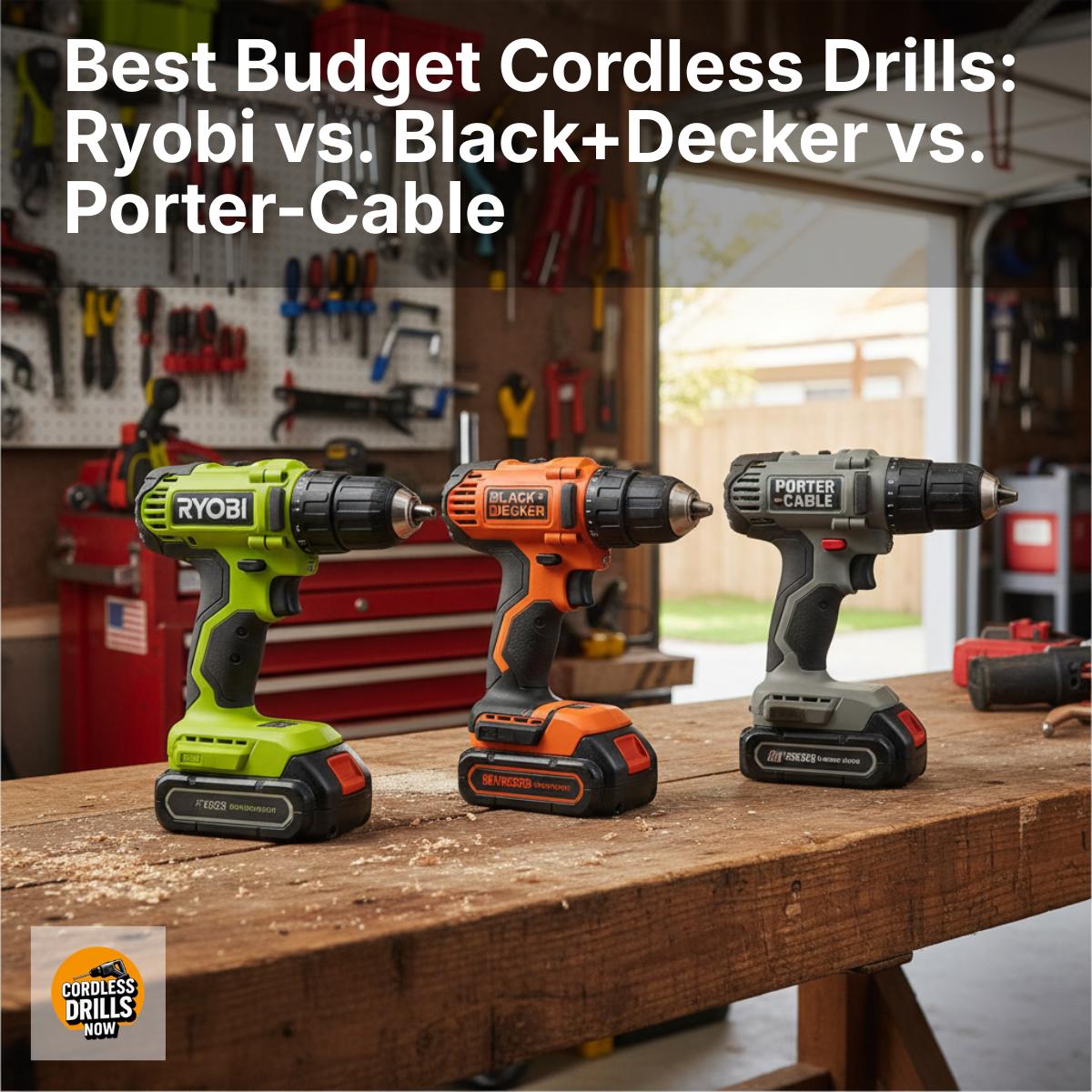
Pick the perfect budget cordless drill from Ryobi, BLACK+DECKER, or Porter-Cable in [current_year], and discover which one will elevate your DIY projects!
-

Navigate the top 10 cordless drills for cold weather in [current_year]—discover which models excel in frigid conditions and why you shouldn’t miss out!
-
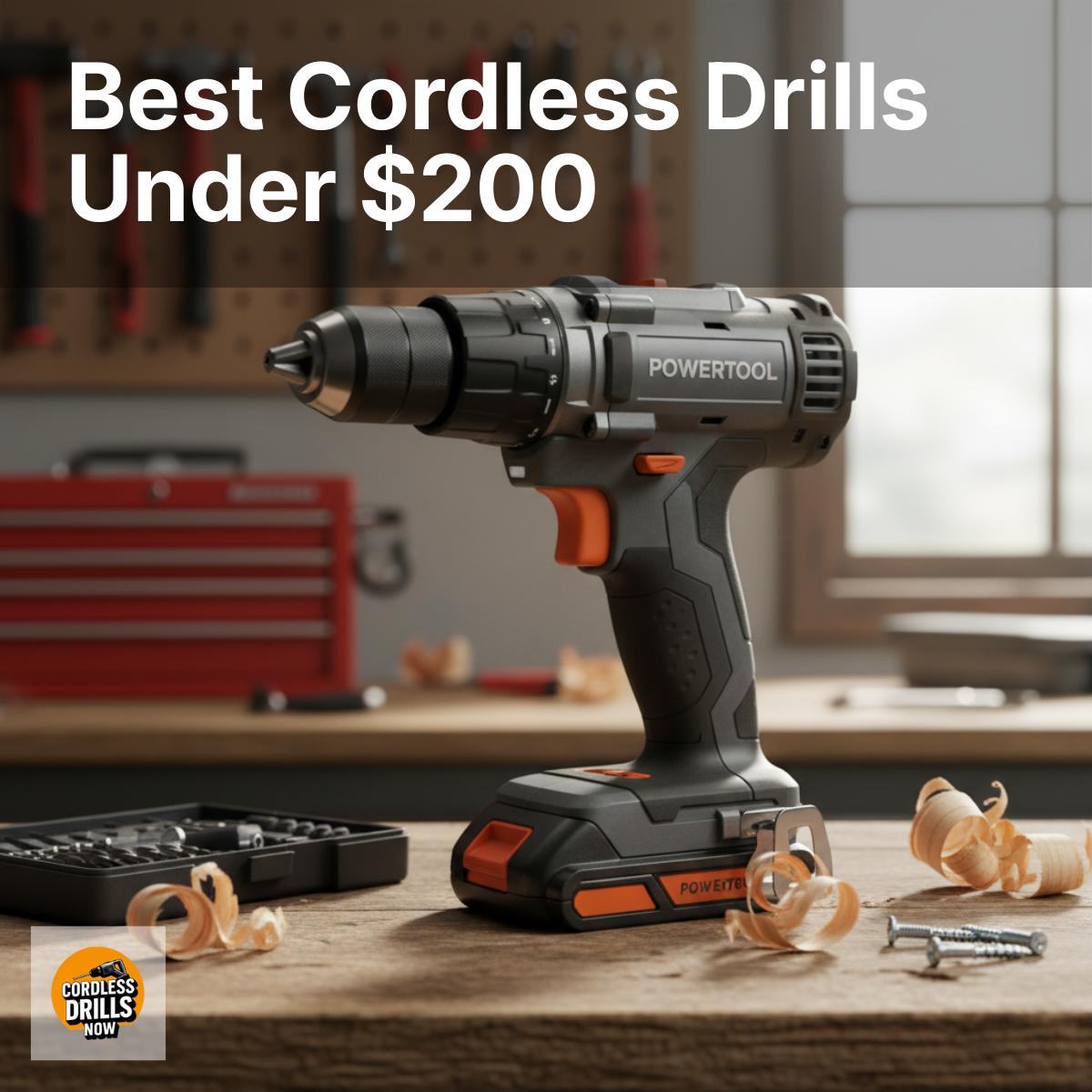
Uncover the top 7 cordless drills under $200 for [current_year] that blend power and value—discover which models made the cut!